

Icons of Christ are among the oldest and most recognisable images in Christian art. They are not portraits in the modern sense: they are theological statements, made to be read as much as seen. This guide explains the main types of Christ icons, the symbols they use, the difference between Catholic and Orthodox approaches, and how to choose an icon for a home, a parish or a gift.
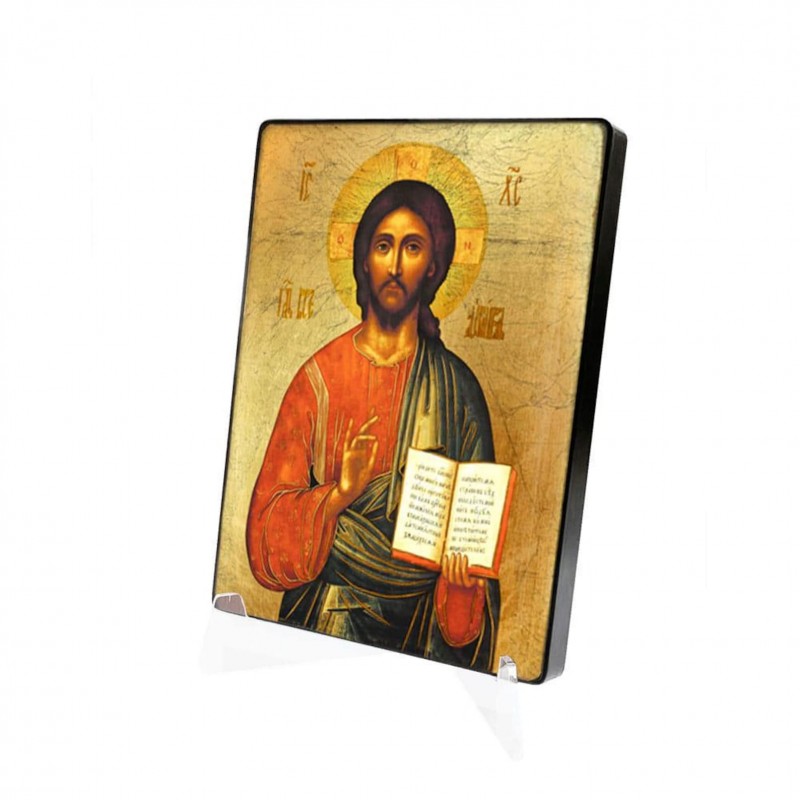
Christ Pantocrator — the classic Byzantine type, with the Gospel and a blessing hand.
What Is an Icon of Christ?
An icon of Christ is an image of Jesus Christ used in Catholic and Orthodox devotion. The word icon comes from the Greek eikōn, meaning image. In Christian use, an icon is not a decoration and not an idol: it is a window onto the person depicted, a visual confession of faith in the Incarnation.
The Second Council of Nicaea (787) defended the veneration of icons and distinguished veneration (dulia) from worship (latria). That distinction is still the key to understanding why Catholics and Orthodox honour icons without worshipping them. The icon is honoured, but the honour passes to the person represented.
The oldest surviving icons of Christ date from the 6th century. The Christ Pantocrator from Saint Catherine's Monastery in Sinai is the best-known example: Christ holds the Gospel in one hand and blesses with the other, a composition that still shapes icons today.
The Main Types of Icons of Christ
Most icons of Christ belong to one of a small number of types. Each type emphasises a different aspect of the same person.
Christ Pantocrator
The Pantocrator, meaning "Ruler of All" or "Almighty", is the classic Byzantine type. Christ is shown frontally, with the Gospel book and a blessing hand. The type appears in churches, homes and prayer corners, and it is the most widely recognised Christ icon in both East and West.
Christ the Good Shepherd
The Good Shepherd shows Christ carrying the lost lamb on his shoulders, often with a staff. It is a favourite for baptism gifts and for family prayer corners because the image is easy to read: care, protection and rescue.
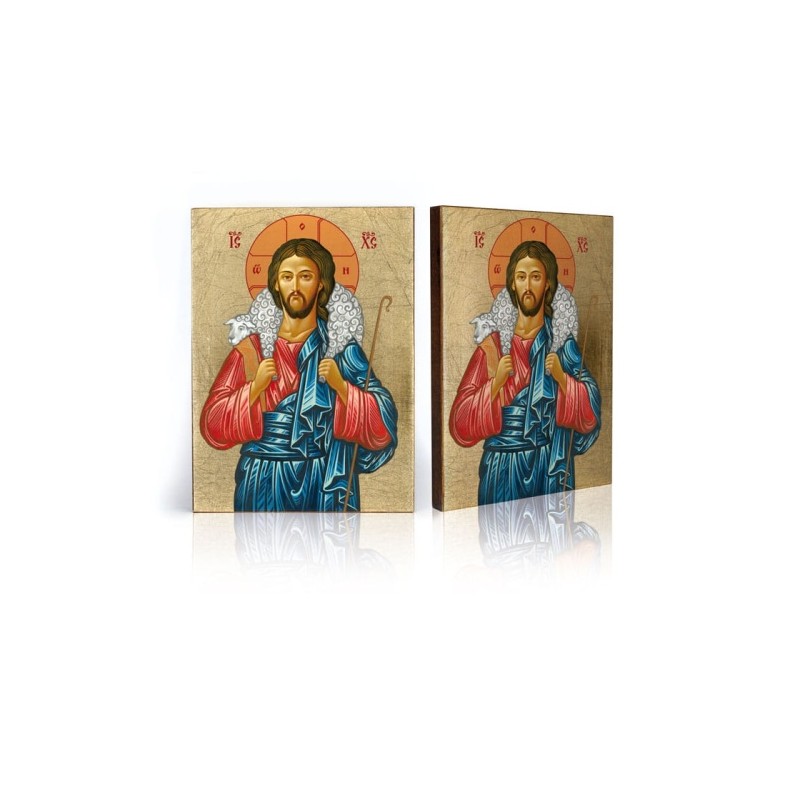
Christ the Good Shepherd — a favourite for baptism and family gifts.
Christ the Teacher
Christ the Teacher shows Christ with the Gospel open and his hand in a teaching gesture. The type is common in schools, studies and catechetical rooms, where the emphasis is on Christ as the Word made flesh.
Christ Enthroned
Christ Enthroned shows him seated in majesty, often with the Gospel and a blessing hand. It is close to the Pantocrator, but the throne and the posture emphasise rule and judgement.
Christ Blessing
Christ Blessing focuses on the gesture of blessing: the right hand raised, with the fingers forming the Greek letters for "Jesus Christ". The type is often chosen for a home prayer corner because it is compact and direct.
The Sacred Heart of Jesus
The Sacred Heart shows Christ's love as a heart, often with a crown of thorns and flames. It is a Western devotion rather than a Byzantine type, and it is especially associated with Catholic piety.
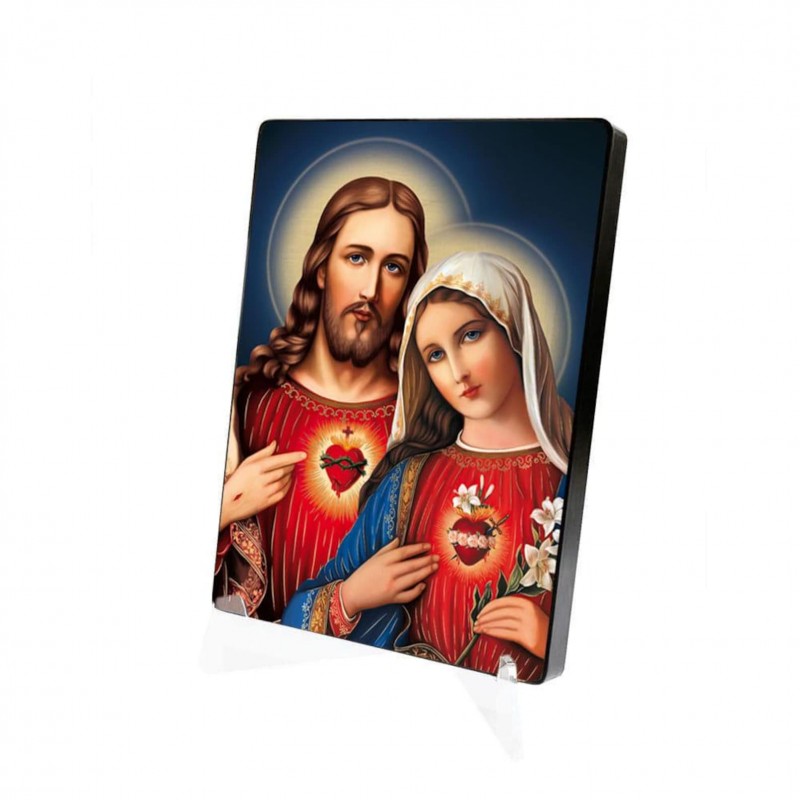
The Sacred Heart of Jesus — a Western devotion.
The Divine Mercy
The Divine Mercy shows the Merciful Jesus with red and pale rays, based on the devotion to St Faustina. Like the Sacred Heart, it is a Western devotion, not a Byzantine type.
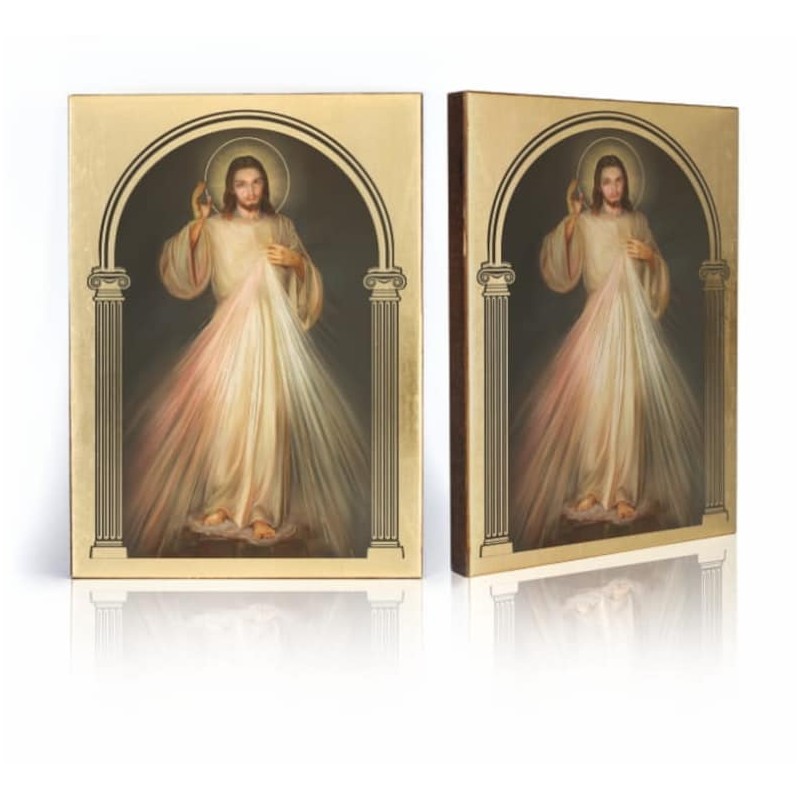
The Divine Mercy — the Merciful Jesus with red and pale rays.
The Resurrection, Crucifixion and Baptism
The Resurrection shows Christ rising from the tomb with a banner; the Crucifixion shows him on the cross, often with Mary and John; the Baptism of Jesus shows the Jordan scene with the dove and angels. These are narrative icons: they tell a moment of the Gospel rather than a single portrait.
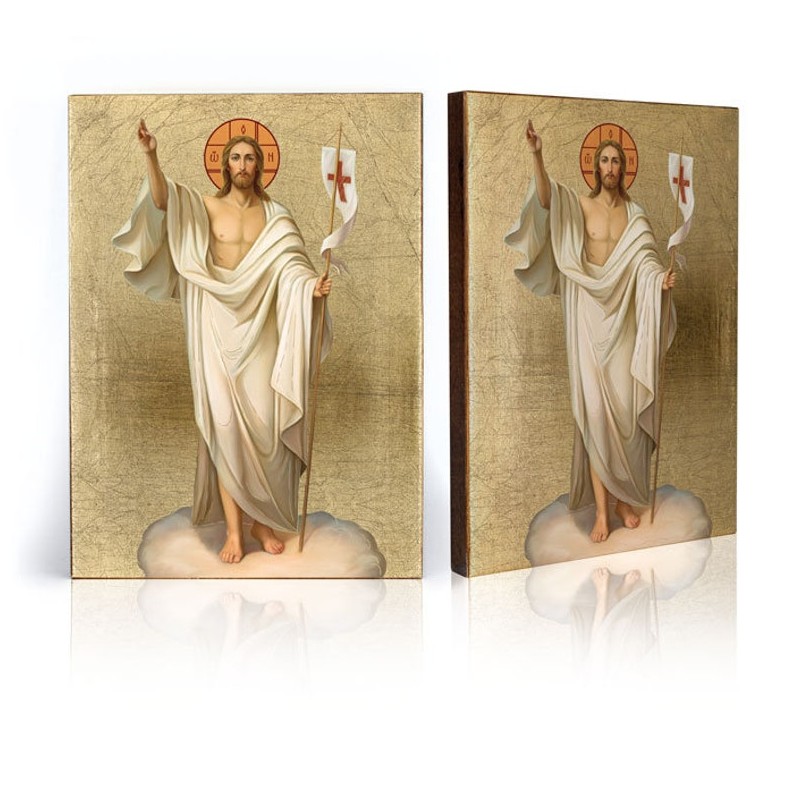
The Resurrection of Jesus Christ — the icon of Easter faith.
The Transfiguration, Last Supper and Holy Face
The Transfiguration shows Christ in glory between Moses and Elijah; the Last Supper shows the institution of the Eucharist; the Holy Face and Ecce Homo show the suffering Christ. Each type has its own liturgical season and its own place in a church or a home.
Symbols of Christ in Icons
Christ icons use a stable visual language. Once you know the main symbols, you can read almost any icon of Christ.
- IC XC — the Greek abbreviation for "Jesus Christ". It usually appears on either side of the head.
- The cross in the halo — a reference to the Crucifixion, even in images of the risen or teaching Christ.
- The Gospel book — the word of God, held open or closed.
- The blessing hand — divine authority, with the fingers often forming the letters for Christ.
- The gold background — divine light, not a physical setting.
- The alpha and omega — Christ as the beginning and the end.
The icon is not a portrait; it is a theological statement. That is why the details are repeated across centuries and across countries.
Catholic and Orthodox Icons of Christ
Catholics and Orthodox both venerate icons of Christ, but they emphasise different types. Orthodox iconography prefers the Pantocrator, the Deesis and the Resurrection, with strict attention to the prototypes. Catholic devotion often favours the Sacred Heart, the Divine Mercy and the Stations of the Cross.
The difference is not a contradiction. It is a difference of emphasis within the same tradition. Our collection includes both Catholic and Orthodox types, so you can choose the image that fits your home, your parish or your family's devotion.
How Icons of Christ Are Made
Our icons are printed on wood and hand-finished with gold accents in our workshop in Lublewo Gdańskie, Poland. They are not hand-painted originals: hand-painted icons are a different product, usually made to order and priced accordingly. A printed and hand-finished icon gives you a consistent, durable image at an accessible price, while a hand-painted icon is a unique work of art.
Formats range from 10.5 × 14 cm (4.1 × 5.5 in) to 30 × 40 cm (11.8 × 15.7 in), depending on the design. Most designs come in one, two or four sizes. A small board works for a nightstand or a desk, a medium format for a prayer corner or a bedroom, and a large format for a living room, a chapel or a parish.
How to Choose an Icon of Christ
Start with the room and the purpose. For a prayer corner, the Pantocrator, Christ Blessing or the Good Shepherd are easy to place and easy to read. For a study or a catechetical room, Christ the Teacher is a natural choice. For a baptism, choose the Baptism of Jesus or the Good Shepherd; for Easter, the Resurrection.
Then choose the size. A small icon works on a shelf or a desk; a medium icon anchors a prayer corner; a large icon belongs in a living room, a chapel or a parish. If you need a specific date, contact us before ordering and we will confirm the lead time.
FAQ — Icons of Christ
What are some famous icons of Christ?
The Christ Pantocrator of Sinai (6th century), the Good Shepherd, the Resurrection, the Sacred Heart and the Divine Mercy are among the most widely recognised. The Pantocrator is the classic Byzantine type; the Sacred Heart and Divine Mercy are Western devotions.
What was the controversy over icons?
In the 8th and 9th centuries, the Byzantine iconoclast movement opposed the veneration of icons. The Seventh Ecumenical Council (787) defended icons, distinguishing veneration from worship, and the restoration of icons in 843 is still celebrated as the Triumph of Orthodoxy.
What are the symbols of Christ in icons?
The letters IC XC abbreviate "Jesus Christ"; the cross in the halo refers to the Crucifixion; the Gospel book is the word of God; the blessing hand speaks of divine authority; and the gold background signifies divine light.
Why don't Catholics like icons?
That is a common misconception. Catholics do venerate icons and images, but they distinguish veneration from worship: icons are honoured as windows to the person depicted, not worshipped as gods. The Second Council of Nicaea (787) defended this practice, and it remains part of Catholic tradition.
Are these icons hand-painted?
No. They are printed on wood and hand-finished with gold accents in our Polish workshop. Hand-painted icons are a different product, usually made to order; ask us if you are looking for one.
How much does an icon of Christ cost?
Our Christ icons cost $48–$63 depending on the design and size. Shipping is calculated at checkout; we ship worldwide from Poland.
Further Reading
- What Is the Icon of Jesus Christ Pantocrator and Why Does It Matter?
- What Is the Icon of the Resurrection of Jesus Christ?
- What Is the Icon of the Baptism of Jesus?
- Why the Icon of Merciful Jesus Enhances Faith
- Why Certain Symbols Are Used in Catholic Iconography
- How Catholics Use Icons Differently From Orthodox Christians
Shop Icons of Christ
Browse our collection of icons of Christ — 118 Catholic and Orthodox designs, printed on wood and hand-finished with gold accents in Poland, from $48.
Sources: Christ Pantocrator, Byzantine Iconoclasm, Second Council of Nicaea.


