


Every religious order began with a founder who heard a call and answered it: Benedict withdrawing to a cave, Francis hearing the crucifix speak at San Damiano, Dominic preaching against heresy, Teresa reforming Carmel from within. The icons of founders and religious preserve their faces and their habits — the black of the Benedictines, the brown of the Franciscans, the white of the Dominicans. This guide explains how to read these icons and introduces the great founders.
Related Products
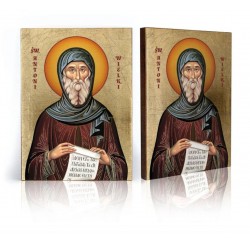
St Anthony the Great, Anthony of Egypt,

Icon of Saint Angela Merici

Icon of Saint Bridget of Sweden
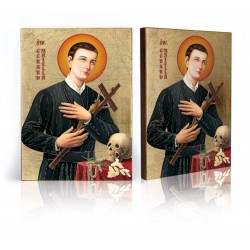
Icon of Saint Gerard Majella With Crucifix,...
Our icons are printed on solid alder wood and finished by hand with gold leaf in Poland.
How to Recognize a Founder or Religious in an Icon
- Habit and its color — the most important clue: black (Benedictines), brown with a hood (Franciscans), white over black (Dominicans), grey (Poor Clares, many others).
- Rule or book — the founder often holds the Rule he or she wrote, or the Gospel.
- Founder's emblem — the Benedictine medal (cross with the letters C S P B), Francis' stigmata, Dominic's star, Teresa's quill and heart.
- Rosary or crucifix — the instruments of their prayer; in many founder icons the saint holds both a book and a crucifix.
- Animals — Francis with the wolf of Gubbio or the birds; Anthony the Great with a pig (a later legend); Benedict with a raven.
For a broader key to attributes, see our guide to saint symbols.
The Great Founders of the Religious Life
- Saint Anthony the Great — the father of monasticism, who went into the Egyptian desert in the third century; the first "founder" of all.
- Saint Benedict of Nursia — author of the Rule that shaped Western monasticism; "ora et labora."
- Saint Francis of Assisi — the poor man of Assisi, founder of the Friars Minor, bearer of the stigmata.
- Saint Dominic de Guzmán — founder of the Order of Preachers, with the star and the dog of the dream.
- Saint Teresa of Ávila — reformer of the Carmelites, Doctor of the Church, with the quill and the pierced heart.
- Saint Bridget of Sweden — founder of the Bridgettine Order and patroness of Europe.
- Saint Angela Merici — founder of the Ursulines, the first teaching order of women.
To go deeper into the story of one of them, read what the icon of Saint Teresa means and the story of Saint Rita, an Augustinian nun.
Why Founder Icons Matter for Religious Communities
For monasteries and convents the founder's icon is a family portrait: it hangs in the refectory, the chapter hall and the chapel. For laypeople, founder icons are a reminder that holiness has a shape — a rule of life, a community, a work. Many families choose a founder icon for a son or daughter entering religious life, and oblates of Saint Benedict keep his icon in their homes.
Frequently Asked Questions
Q: What is a "confessor" versus a "founder" in the calendar?
A: "Confessor" means a saint who suffered for the faith but died in peace; "founder" describes the saint's role, not a separate category of sanctity.
Q: Why is Saint Anthony the Great shown with a bell and a pig?
A: The pig comes from the privilege of his order to raise swine in the Middle Ages; the bell and the "T" cross are his oldest attributes.
Q: Can I order an icon of a modern founder, like Saint Mother Teresa?
A: Yes — modern founders are part of our modern saints collection, and custom commissions are possible.
Q: Are founder icons appropriate gifts for nuns and monks?
A: They are among the most appreciated gifts for jubilees, first professions and monastery anniversaries.
Related reading
Browse the Icons of Founders and Religious collection, then read What Is the Icon of Saint Teresa and What Is the Icon of Saint Rita.
Shop the icons
- St Anthony the Great, Anthony of Egypt
- Icon of Saint Angela Merici
- Icon of Saint Bridget of Sweden
- Icon of Saint Gerard Majella With Crucifix, Skull, and Lilies
Browse the full Icons of Founders and Religious collection.


